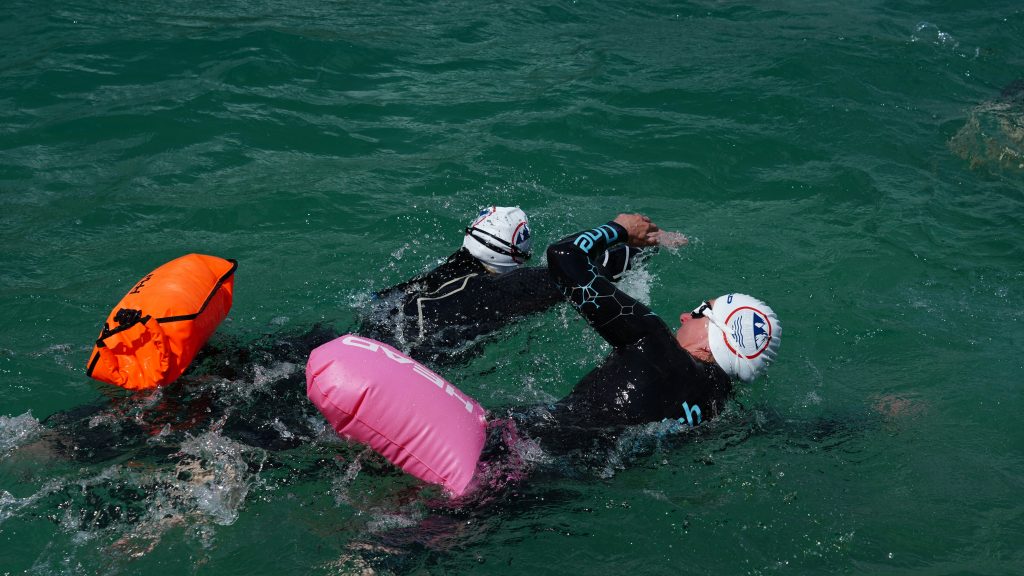
When I switched from the pool to the sea and had to learn to swim all over again — An Essential Guide to Open Water Swimming

I remember the first time I decided to be “adventurous” and trade the pool for the sea. I thought it was the same thing: strokes, kicks, breathing. Easy.
The minute I put my feet in the water, I realized I was completely wrong. The cold was unexpected, the waves seemed to have their own agenda to swallow me, and, worse, I couldn’t see anything! I lost my sense of distance, direction, and started to feel… a bit disoriented. Fortunately, after sharing my experience with friends, one of them gave me the tip that saved my training (and my sanity): for open water swimming, the right gear makes all the difference.
Over time, I learned that the secret is not just in technique, but in the right items to ensure your adventure at sea is safe and enjoyable.
Here are the 5 pieces of equipment that transformed me from a “near-shipwreck” into a confident open water swimmer:
1. Neoprene Suit (Wetsuit)
My first mistake was thinking my pool swimsuit would be enough. The wetsuit isn’t just for keeping warm; it offers extra buoyancy, which helps you maintain a more horizontal position and save energy. It’s your life vest disguised as a swimsuit, and a crucial item for colder waters.
2. Safety Buoy
This is my favorite item and the one that made me feel truly safe. The buoy, which attaches to your waist, has three crucial functions: 1) it makes you a visible reference for boats, jet skis, and the rescue team; 2) it serves as a support to rest if you get cramps or tired; and 3) it allows you to store small objects. Always choose fluorescent colors like orange, yellow, or pink.
3. Open Water Swimming Goggles
Say goodbye to pool goggles. For the sea, you need open water swimming goggles with larger lenses, which offer a wider field of vision. Models with mirrored or polarized lenses are perfect for dealing with sun glare and for seeing your references on the coast, like that big rock or that house on the cliff.
4. Fluorescent Silicone Cap
The silicone cap isn’t just for protecting your hair. Like the buoy, its main function is visibility. Black or white caps blend in with the bottom of the sea. Fluorescent caps, on the other hand, make you stand out and easily visible to anyone on the surface.
5. Emergency Whistle
It’s a small item, but it can save your life. The sound of a whistle travels much further than your voice, especially amidst the noise of waves or wind. Attach one to your suit or buoy to have an effective alarm signal in case of an emergency.
The adventure of swimming in open water is fantastic, and with the right gear, safety is no longer a concern.
Ready for your next challenge? Find your next triathlon or open water swimming race on RaceFinder.pt and turn every stroke into a step towards your first open water medal.