Slow Running: You Don’t Have to Be Fast to Enter a Race

Many people enjoy running but continue postponing their first race because they believe they are not fast enough yet.
You might be worried about finishing last. You may need to walk. Perhaps it seems as though every other participant trains more, owns better equipment or knows exactly what they are doing.
But entering a race is not a privilege reserved for the fastest athletes.
There is no minimum pace that turns you into a “real runner”. You do not need to run every kilometre without stopping, own an expensive watch or chase a personal best. For many people, the first victory happens before the starting line, when they finally decide to enter.
The idea of slow running is helping to change the way we look at the sport. Instead of focusing entirely on pace, it values consistency, enjoyment, health and the experience of moving.
That can also include taking part in a race.
Looking for your first event?
Discover races across different distances and disciplines on RaceFinder. Use code 30OFF on eligible registrations.
What is slow running?
Slow running does not mean that you always have to run slowly or that you cannot aim to improve your time.
It simply means that pace does not need to be the centre of every run.
It is a more accessible approach in which running can help you:
- improve your physical and mental health;
- build a routine;
- spend time with friends;
- discover new places;
- become part of a community;
- overcome a personal challenge;
- simply enjoy moving.
For some people, slow running means maintaining a comfortable pace. For others, it means alternating between running and walking. It can also mean choosing not to compare every kilometre with what other people post online.
Your pace is only one piece of information. It does not determine whether you deserve to stand on a starting line.
Do you need to be fast to enter a race?
No.
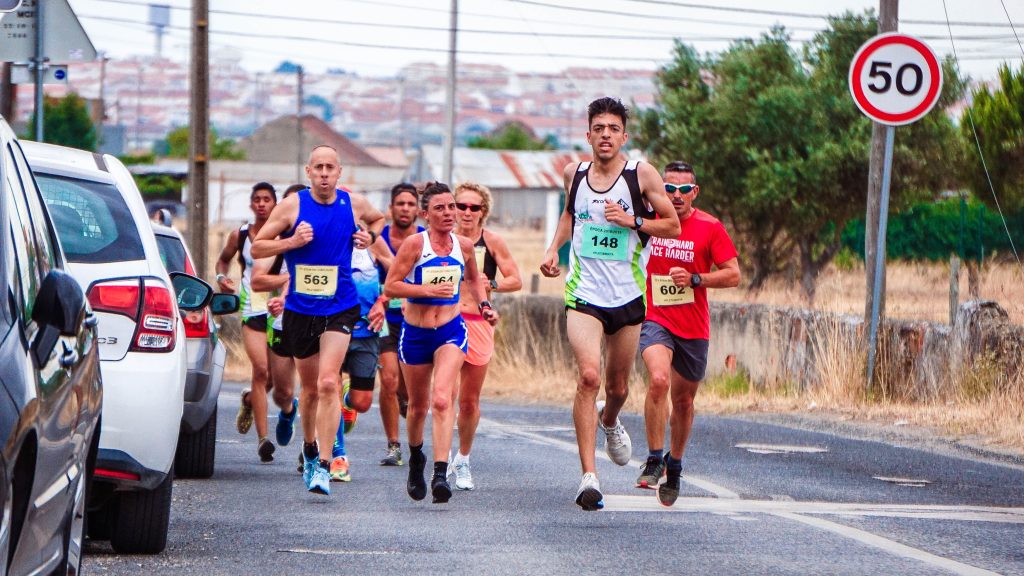
Races bring together people with very different levels of experience, paces and goals. Some participants want to compete for a position. Others are chasing a personal best. Many simply want to complete the distance, share the experience with friends or enjoy the atmosphere.
The same starting line may include:
- experienced athletes;
- people completing their first 5K;
- runners returning after a break;
- participants alternating between running and walking;
- friends taking on a challenge together;
- people who are simply curious about race day.
Someone else running faster does not make your experience less important.
Can you walk during a race?
In many events, yes. Alternating between running and walking is a legitimate strategy that can help you control your effort, manage the distance and enjoy the event.
However, you should always check the event regulations before entering.
Look for:
- the official time limit;
- whether there is a separate walk;
- how long the course remains open;
- cut-off times;
- the difficulty and elevation of the route;
- any event-specific rules.
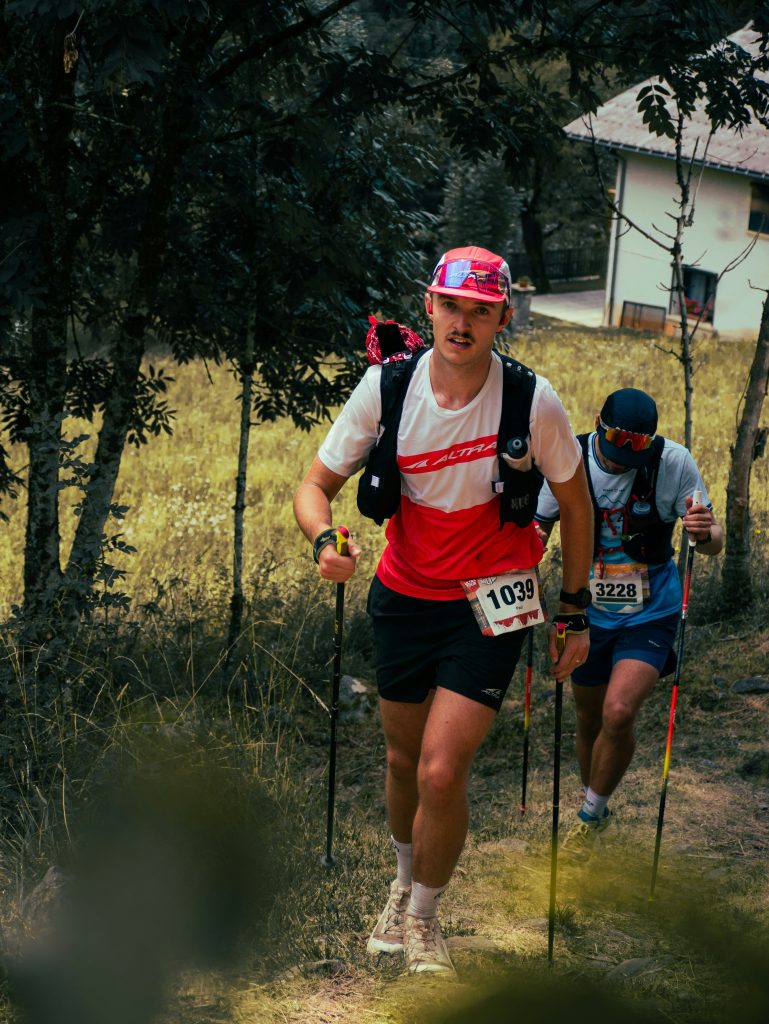
Many road races are accessible to people who use a run-walk strategy. A trail race, even over a short distance, may take significantly longer because of the terrain and climbing.
Distance alone does not tell the entire story.
The fear of finishing last
This is one of the most common concerns among first-time participants.
But someone will always finish last. That does not mean that person has failed.
The final participant also trained, showed up and completed the route. At many events, those finishing later receive just as much, or sometimes even more, support from spectators and volunteers.
Results are also often divided by gender, age group and category. Your time does not need to be compared with the fastest athlete in the race.
A more useful question is not:
“Will I be slower than everyone else?”
It is:
“Is this event suitable for my current level, and can I finish within the time limit?”
How to choose your first race
The best first race is not necessarily the biggest, most famous event or the one with the most attractive medal.
It is the race that allows you to arrive at the starting line feeling prepared enough to enjoy the day.
Start with a realistic distance
A 5K can be the perfect first goal. It is challenging enough to create motivation while usually remaining accessible to people who are still building consistency.
A 10K can also be a good choice when you are already running regularly.
You do not need to begin with a half marathon. Longer distances will still be available when you are ready.
Check the course profile
Five flat kilometres are very different from five kilometres involving hills, technical trails or sand.
Check:
- elevation gain;
- terrain;
- course profile;
- number of climbs;
- expected conditions;
- aid stations.
A short event can still be demanding when the terrain is more technical.
Confirm the time limit
The time limit helps you understand whether the event is suitable for your current pace.
Make a realistic estimate that includes any walking breaks, aid-station stops or moments when you may need to slow down. Do not base the calculation only on your best training run.
Choose a local event
For your first race, choosing an event near home can remove a significant amount of stress.
You will not need to arrange complicated transport, accommodation or a long journey. It is also easier to invite friends or family to join you.
Look for events with several distances
Events offering a 5K, 10K, walk and children’s race often attract a broad range of participants.
This can create a more relaxed atmosphere and allow several people from the same group to take part, even when they have different abilities.
Read the regulations
Before paying for your entry, confirm:
- the minimum age;
- start time;
- bib collection location;
- mandatory equipment;
- insurance requirements;
- cancellation policy;
- time limit;
- included services.
The fewer surprises you have on race day, the easier it will be to enjoy the experience.
You do not have to run without stopping
A run-walk strategy can be particularly useful for beginners.
You could:
- run for five minutes and walk for one;
- walk on the climbs;
- slow down at aid stations;
- choose specific parts of the course for recovery;
- start more slowly than you think is necessary.
Walking does not erase the kilometres you have already completed. It does not make your participation less valid.
Many experienced runners use walking breaks during long-distance events, trail races, hot conditions or courses with significant elevation.
The best strategy is the one that helps you reach the finish safely and have a positive experience.
Your equipment does not need to be perfect
Social media can make it seem as though you need several pairs of running shoes, a GPS watch, specialist sunglasses, a hydration vest and an entire collection of nutrition products.
For a short first race, you usually need far less:
- running shoes you have already used in training;
- comfortable clothing suitable for the weather;
- socks that do not cause discomfort;
- your bib attached correctly;
- water and nutrition appropriate for the event.
Race day is not the ideal time to test new shoes, clothing, breakfast or supplements.
Use what you already know and what has worked during training.
Your first race does not need to be perfect
You may start too quickly. You may need to walk more than expected. The route may feel more difficult than it looked in the photographs.
That does not mean you were not ready to take part.
Your first race is also an opportunity to learn:
- how you feel among other participants;
- how to manage your pace;
- when to eat or drink;
- how to deal with nerves;
- what type of event you enjoy;
- what you would do differently next time.
You do not need to finish with a personal best for the experience to be worthwhile.
Running with other people can make it easier
Entering with a friend, family member or running group can reduce the anxiety surrounding your first race.
You can:
- train together;
- collect your bibs together;
- agree on a pace;
- meet at the start;
- celebrate after the finish.
However, discuss your goals beforehand. One person may want to race quickly while the other prefers to enjoy the route. There is nothing wrong with starting together and finishing separately.
Your race is still your own.
How do you know whether you are ready?
There is no single test that determines when someone is ready to enter.
However, a few signs can help:
- you can complete a distance close to the race distance in training;
- you have been running or walking consistently;
- you know your comfortable pace;
- you have a plan for alternating running and walking;
- you have checked the regulations and time limit;
- you are not ignoring an injury or health problem;
- the goal feels challenging but possible.
You also do not need to wait until you feel completely confident. Some nervousness before your first event is normal.
Your first goal can simply be to finish
We often talk about times, paces and personal records. But a race can represent many different things.
Your goal may be to:
- arrive at the starting line;
- complete your first 5K;
- run more than you walk;
- finish within the time limit;
- take part with a friend;
- return to racing after a break;
- enjoy yourself;
- cross the finish line wanting to do it again.
Every one of those goals is valid.
You do not need to justify your pace. You do not need to wait until you look like an athlete. And you do not need to be fast to wear a race bib.
The starting line is for you too
Running does not belong only to the people at the front.
It belongs to beginners, returning runners, slower runners, people walking the hills and everyone who needs more time to reach the finish.
Your first victory may simply be choosing an event, registering and showing up.
The rest is built one kilometre at a time.
Discover races, walks and events for different experience levels on RaceFinder. Use code 30OFF on eligible registrations and find your next finish line.