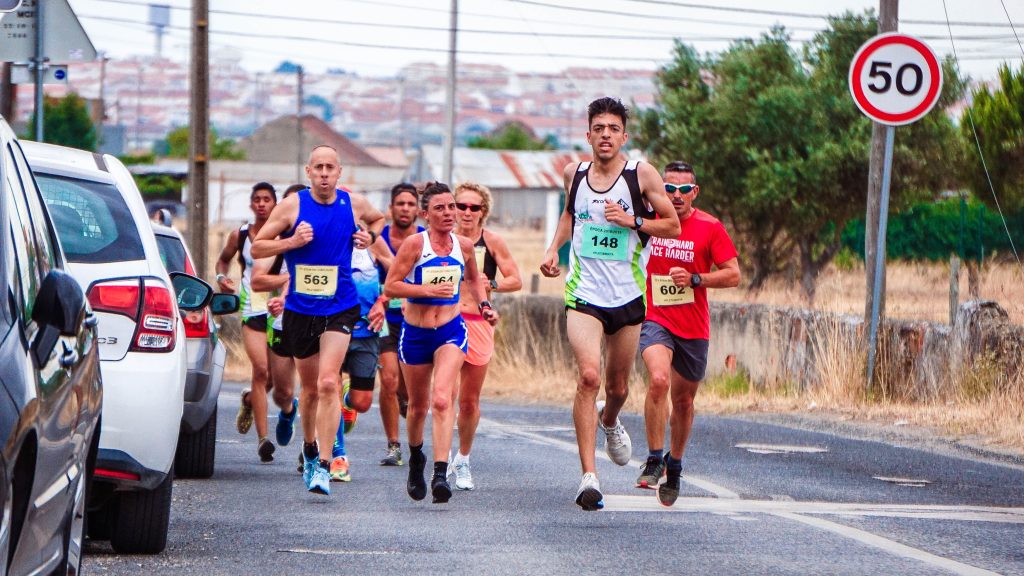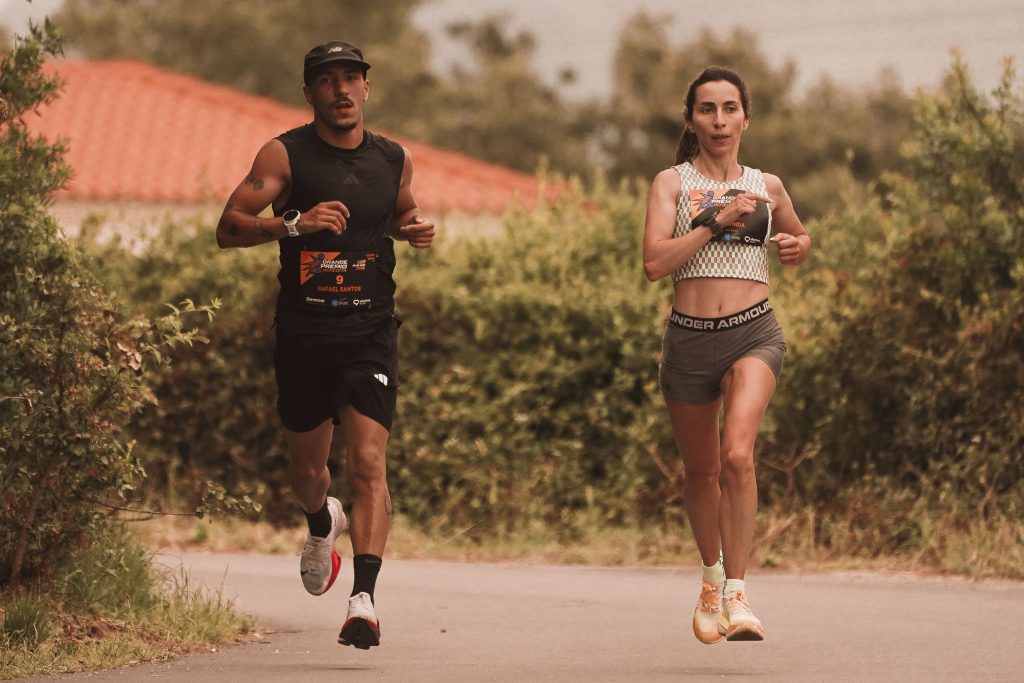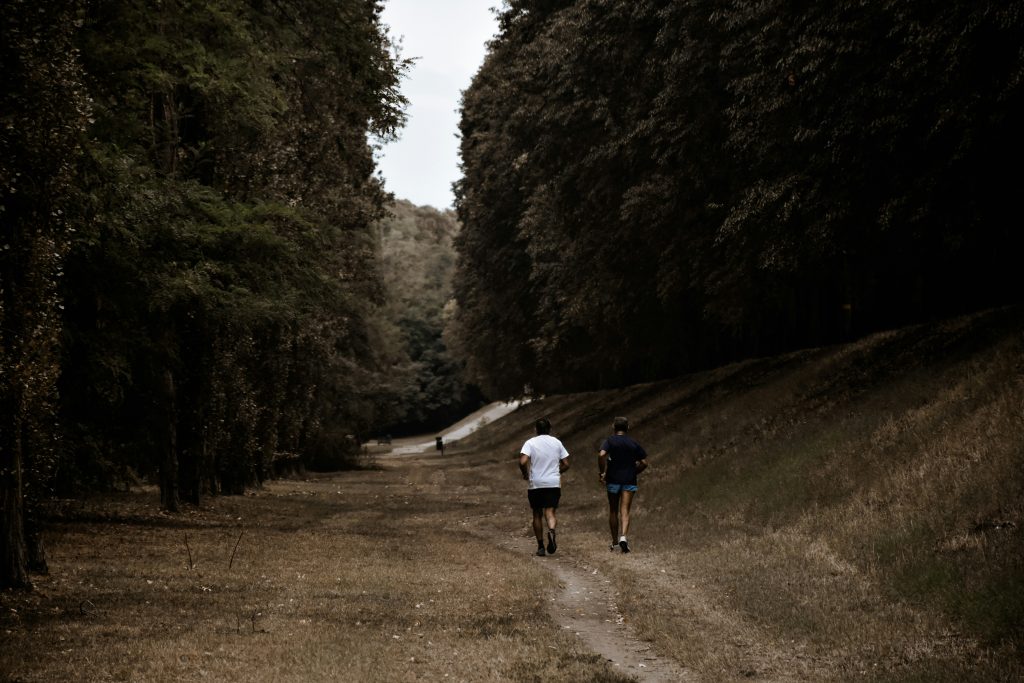
From Road Running to Trail Running: 7 Mistakes to Avoid in Your First Race
Moving from the road to the trails can completely change the way you experience running. Instead of trying to maintain a steady pace, you need to adapt your effort to climbs, descents, rocks, roots, mud and constantly changing terrain.
Trail running takes place mainly on natural surfaces, such as dirt paths, forest trails and single tracks. For this reason, two races with the same distance can have very different levels of difficulty. (worldathletics.org)
Thinking about taking part in your first trail race? Here are seven common mistakes to avoid, along with some real race suggestions to help you discover the sport.
1. Choosing a race based only on distance
A 12 km trail race can be considerably more demanding than a 15 km or even 20 km road race.
Before registering, check:
- The total elevation gain
- The type of terrain
- The technical difficulty
- The time limit
- The location of the aid stations
- The mandatory equipment
Distance is only one part of the challenge. Elevation and terrain can significantly increase the time needed to complete the race.
For your first experience, look for a shorter distance, manageable elevation and a route that is not described by the organiser as extremely technical.
2. Training only on roads or flat terrain
The endurance developed through road running is still valuable, but it does not fully prepare your body for the constant changes in terrain found during a trail race.
During your preparation, gradually try to include:
- Dirt paths
- Short and long climbs
- Descents
- Stairs
- Routes with rocks or roots
- Sessions with different levels of effort
Training on different surfaces helps develop coordination, stability and confidence. World Athletics also recommends practising on terrain similar to what you expect to find during the race, rather than focusing your entire preparation only on climbing. (worldathletics.org)
You do not need to complete every training session in the mountains. However, arriving on race day without ever having run on uneven terrain can make the experience considerably more difficult.
3. Thinking you need to run the entire course
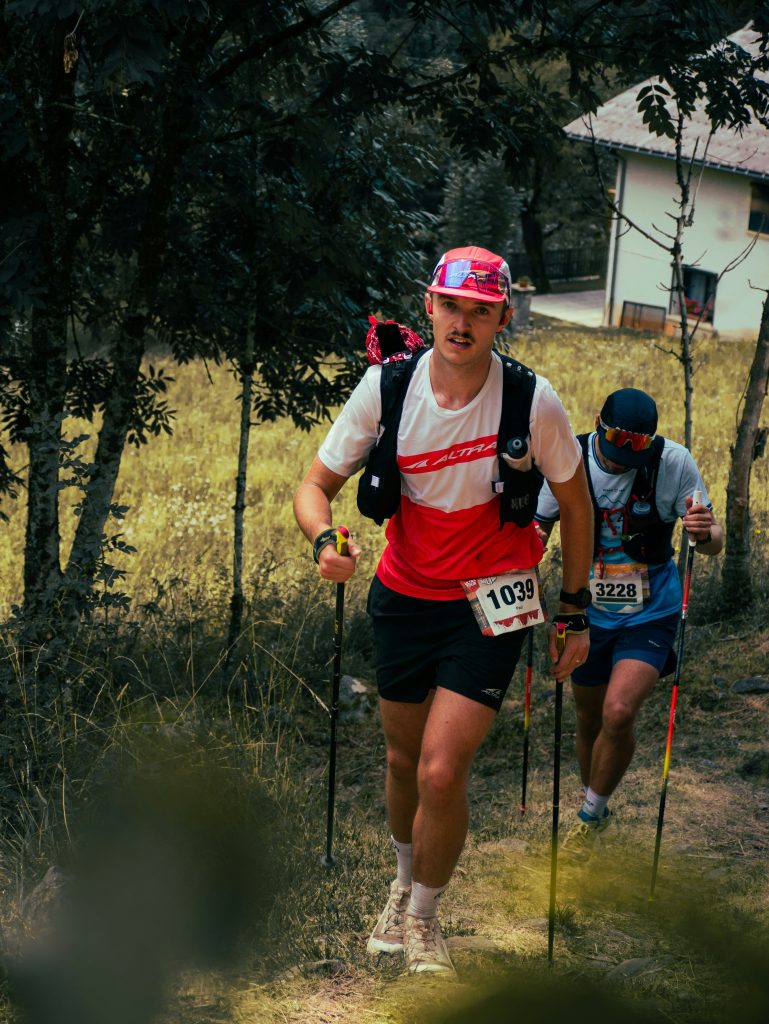
Walking is part of trail running.
On steeper climbs, fast hiking can be more efficient than trying to run. It allows you to control your breathing, preserve your legs and avoid using too much energy at the beginning of the race.
The goal is not to run every metre, but to keep moving at a sustainable effort. Even experienced athletes alternate between running and walking when the terrain or gradient requires it.
During your first race, do not be afraid to walk on the climbs and start running again when the course becomes more favourable.
4. Not training for the descents
Climbs usually receive the most attention, but descents can be just as demanding.
Running downhill on uneven terrain requires balance, strength, coordination and the ability to quickly decide where to place your feet. It also creates a different muscular load from running on flat ground.
Start by practising on less technical descents with a moderate gradient. Keep your steps short, look a few metres ahead and increase your speed only as your confidence improves.
Progressive downhill training is particularly important for runners who are new to trail running. (worldathletics.org)
5. Wearing new shoes or equipment on race day
Nothing you plan to use during the race should be completely new.
Test the following in advance:
- Your shoes
- Your socks
- Your backpack or running vest
- Your belt
- Your hydration system
- Your clothing
- Your gels or food
Your shoes should provide suitable grip for the type of terrain. A dry and relatively easy route will not necessarily require the same outsole as a course involving mud, wet rocks or steeper descents. (worldathletics.org)
You should also check the mandatory equipment listed in the race regulations. Depending on the event, the organiser may require items such as a mobile phone, whistle, emergency blanket, water container or waterproof jacket.
6. Not planning your hydration and nutrition
In trail races, aid stations may be further apart and your total race time may be much longer than expected for the same distance on the road.
Read the regulations and confirm:
- How many aid stations there are
- At which kilometres they are located
- Whether they provide liquids, solid food or both
- Whether you need to carry your own water
- Whether there are rules regarding reusable cups or containers
Only carry products that you have already tested during training. Your hydration and nutrition strategy should be practised in advance, as there is no single solution that works for every runner. (worldathletics.org)
You may not need to consume much food during a shorter race. Even so, you should arrive properly hydrated and understand the course conditions before starting.
7. Comparing your pace with a road race
Average pace per kilometre becomes far less important in trail running.
During the same race, you may complete one kilometre quickly on a descent or wide path, followed by a much slower kilometre because of a climb, technical terrain or narrow section.
Instead of trying to maintain your usual road pace, focus on:
- Controlling your breathing
- Managing your effort
- Remaining stable on the terrain
- Saving energy for the second half
- Respecting the conditions of the course
On routes with changing elevation and difficulty, perceived effort is usually a more useful reference than trying to maintain the same pace throughout. (salomon.com)
How to choose your first trail race
There is no perfect distance for every beginner. Your choice should depend on your running experience, fitness level, previous contact with trails and the specific characteristics of the course.
Before registering:
- Check the distance and elevation gain.
- Read the complete race regulations.
- Look for the route map or elevation profile.
- Confirm the mandatory equipment.
- Check the aid stations and time limit.
- Search for photographs or videos from previous editions.
- Choose a race that matches your current training.
It is better to finish your first trail race wanting to return than to immediately choose a route that is too long or technical.
6 races to consider for your first trail
The following events include shorter distances within their race programmes. This does not necessarily mean that they are easy. Always check the regulations, elevation profile and terrain before registering.
1. Trail Santa Justa 2026
Date: 27 September 2026
Location: Valongo
Shortest option: 10 km
Elevation gain: Approximately 300 metres
The 10 km distance can be completed either by running or walking, offering greater flexibility for participants experiencing the trails for the first time. The event takes place in Serra de Santa Justa and also includes 15 km and 31 km distances. (stopandgo.net)
Despite the accessible distance, it is still a mountain trail race. Include some climbing and descending sessions in your preparation.
2. III Trail Pé Firme
Date: 26 and 27 September 2026
Location: Torres Vedras
Shortest option: 12 km Mini Trail
The programme includes 12 km, 23 km and 32 km races, as well as a walk, relay and activities for younger participants. The variety of formats makes it an event to consider for athletes and families with different levels of experience. (racefinder.pt)
For a first trail race, the 12 km option is the most suitable distance within the programme, although you should still check the course profile before registering.
3. Trail e Caminhada Rota da Maçã de Montanha
Date: 3 October 2026
Location: Armamar
Shortest trail option: 12 km
Other options: 20 km trail and 8 km walk
The shorter trail is approximately 12 km and is classified by the organiser as a medium-difficulty course that requires some physical preparation. The event forms part of the 2026 Feira da Maçã de Montanha. (assets.acorrer.pt)
It could be a good transition for runners who already train regularly on the road and have started including climbs and natural terrain in their sessions.
4. TMZ – Trail Mãos do Zêzere
Date: 4 October 2026
Location: Serra de Tomar
Shortest option: 13 km Mini Trail
Elevation gain: Approximately 350 metres
The event includes a 13 km mini trail, a 22 km trail and a walk. The routes take place in the Serra de Tomar area, with views over the Castelo do Bode reservoir. (racefinder.pt)
The 13 km distance and approximately 350 metres of elevation gain make it an interesting possibility for runners looking for a shorter race who have already completed some trail-specific preparation.
5. Trilho das Oliveiras
Date: 11 October 2026
Location: Morais, Macedo de Cavaleiros
Shortest option: 6 km Mini Trail
Other options: 12 km Short Trail, 20 km Long Trail and a walk
The 6 km Mini Trail is one of the shortest options on this calendar and could be an interesting choice for anyone who does not want to begin with a distance above 10 km. The event also includes a social lunch after the race. (racefinder.pt)
The shorter distance does not remove the challenges associated with natural terrain, but it allows participants to experience the dynamics of a trail race without immediately taking on a long-distance event.
6. Trail do Aqueduto
Date: 11 October 2026
Location: Paredes
Shortest trail option: 13 km
Other options: 23 km, 33 km and a 9 km walk
The races start and finish at Campo de Golfe do Aqueduto and follow trails and paths across the municipality of Paredes. The programme includes a 13 km Short Trail, as well as longer distances and a walk. (traildoaqueduto.pt)
It is an option to consider for runners who can already comfortably complete similar distances on the road and have started adapting their training to climbs and uneven terrain.
Your first trail begins before the starting line
Your introduction to trail running should not begin by choosing the longest or most difficult race.
Start by getting to know the terrain, adapting your training and selecting a distance that suits your current level. Walk when necessary, control your effort and enjoy the experience of running in a different environment.
On RaceFinder, you can compare trail races across different regions of Portugal, check the available distances and find your next challenge according to your goals.
Explore the upcoming trail races on RaceFinder and start preparing for your first adventure away from the road.