Trail Running for Beginners in Portugal: Where to Start
There’s a moment in many road runners’ lives when the routine starts to wear thin. The same kilometres, the same surfaces, the same scenery. And then someone mentions trail running. Or a photo appears in a group chat — someone standing on a ridge, looking out at a landscape that seems impossible to exist so close to home.
If you’re at that moment, this guide is for you.
What Is Trail Running, Exactly?
Trail running is running in natural terrain — mountain paths, forest tracks, rural trails, coastal cliffs, river valleys. Unlike road running, the ground is varied, irregular and unpredictable: rocks, tree roots, mud, steep climbs, technical descents.
That changes everything. The pace, the technique, the gear, the way you train — and also the way you experience a race. Trail running isn’t just sport. It’s exploration.
In Portugal, trail running has grown explosively over the past decade. In 2026, trail events continue to grow across the country, with more accessible distances and beginner-friendly races than ever before. If you’ve been waiting for a good moment to try, it’s now.
How Trail Running Differs from Road Running
Before getting into the details, it’s worth understanding how trail changes the experience:
Pace: In trail, pace per kilometre stops being the main metric. The terrain varies so much that two kilometres can take completely different amounts of time. Most trail runners measure effort by heart rate or simply by feel.
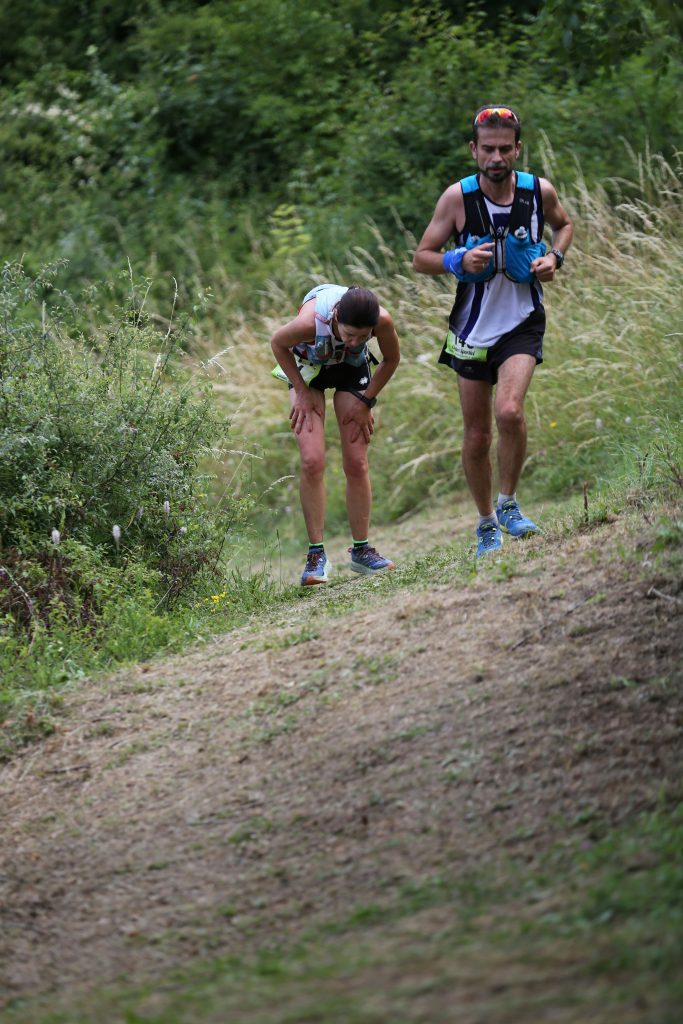
Climbing: In trail, walking steep uphills isn’t weakness — it’s strategy. The world’s best trail athletes walk on technical climbs because it’s energetically more efficient than running. Don’t feel embarrassed to walk.
Descent technique: Descending in trail is a learnable skill. Relaxed knees, short steps, eyes a few metres ahead rather than at your feet — these are the basics.
Time on feet: Trail distances are deceptive. A 15 km trail with significant elevation can take longer than a half marathon on the road. Plan your nutrition and hydration accordingly.
Essential Gear for Getting Started
You don’t need to invest heavily to start trail running. But there are items where the difference between right and wrong is felt with every step.
Trail shoes: The single most important item. A trail shoe has a specific outsole designed for grip on irregular terrain — very different from a road running shoe. For beginners, choose a versatile model with medium grip that works well across mixed terrain: dirt, loose rocks, wet grass.
Hydration vest or pack: For events over 15 km, or in terrain with infrequent aid stations, carrying water is essential. Hydration vests are comfortable, adjustable and distribute weight well. Most trail races require participants to carry their own water.
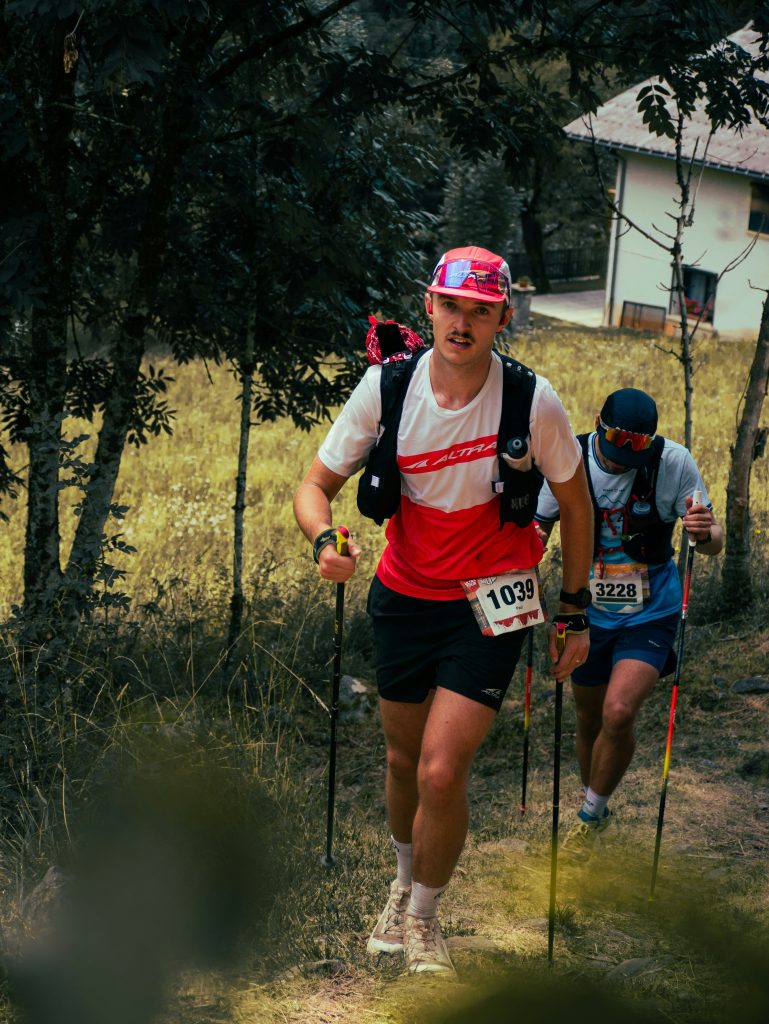
Poles: Optional for beginners, but very useful on long climbs and technical descents. They reduce impact on the knees and help maintain balance on unstable ground.
Lightweight rain jacket: Mountain weather in Portugal changes quickly. An ultralight jacket at the bottom of your pack can make all the difference — many trail races have it on the mandatory gear list.
How to Train for Your First Trail Race
If you already run regularly on the road, you have the aerobic base you need to get started. What you’ll need to develop specifically for trail:
Quadriceps strength: Technical descents demand a lot from your quads. Exercises like squats, lunges and step-downs are fundamental — start adding them to your routine several weeks before your first race.
Training on varied terrain: Start including paths, parks with uneven ground and small hills in your regular runs. You don’t need to travel to a mountain range — any terrain that gets you off flat pavement builds the specific strength and balance trail requires.
Gradual progression: Don’t jump from road running to a 30 km trail race. Start with 8-12 km events with minimal elevation gain and increase progressively.
Your First Race: What to Choose
For a first trail race, look for events with:
- Distances of 10 to 15 km
- Cumulative elevation below 500 metres
- Good course marking
- A relaxed, mixed-level atmosphere
From the events currently open for registration on RaceFinder, these are accessible options for beginners:
Ondas Trail 2026 A trail event with multiple distance options in a coastal setting — more forgiving terrain than mountain trails, with unique scenery along the Portuguese coast.
1st Edition Trail Montes da Chainça First editions are typically designed to attract participants of all levels — the organisers want a successful launch, which means accessible courses and a welcoming atmosphere. Ideal for a debut.
Trail da Padeira Solidário 2026 A trail with a charitable component, relaxed atmosphere and distances suitable for beginners. The community spirit at this kind of event makes the first-timer experience much more enjoyable.
Trilhos da Malaposta Local trails with a good balance between challenge and scenery — the kind of event that captures why trail running in Portugal is special.
Convívio ADAR Trail The name says it all: convívio means social gathering in Portuguese. A trail built around community and enjoyment — perfect for a first experience.
III Trail Pé Firme Pé firme means steady footing — which is exactly what this event delivers. Courses adapted to different profiles with an atmosphere that welcomes newcomers.
What to Expect at Your First Trail Race
It will be harder than you expected — and you’ll love it.
Trail puts you on terrain you can’t control, against a clock that matters less than the experience. Trail runners in Portugal are generally a welcoming community, especially towards newcomers. At aid stations, on tough climbs, at the finish line — there’s always someone with an encouraging word.
Arrive early, carry more water than you think you’ll need, and remember: at your first trail race, the only goal is to finish and want more.
Discover Trail Races Across Portugal
Find trail races for all levels — from 10 km to ultras — filtered by region, distance and date at racefinder.pt.