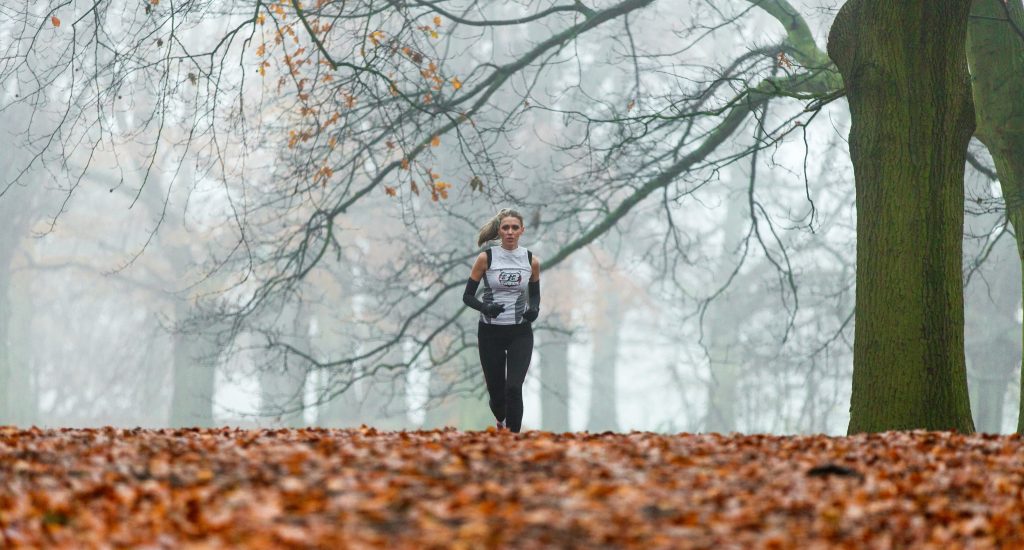
Running in Autumn: How to Prepare for Rain, Wind and Less Daylight

Autumn is one of the best times of the year to race in Portugal. Temperatures drop, the race calendar fills up again, and longer distances usually become much more comfortable than during the hottest summer months.
But autumn also introduces a few extra variables: rain, wind, wet roads and trails, colder mornings and fewer hours of daylight.
Whether you are preparing for a major road race such as the Porto Marathon or a night trail in December, being ready for the conditions can matter almost as much as getting your pacing right.
Don’t rely too much on an early weather forecast
It is normal to start checking the weather as race day approaches, but a forecast seven or ten days out can still change significantly.
Use it to identify trends rather than make final decisions.
Your most useful check should come two or three days before the race. Look at:
- temperature around the start time;
- chance and intensity of rain;
- wind speed and direction;
- humidity;
- feels-like temperature.
Most importantly, check the weather for the hours when you will actually be running rather than simply looking at the day’s maximum temperature.
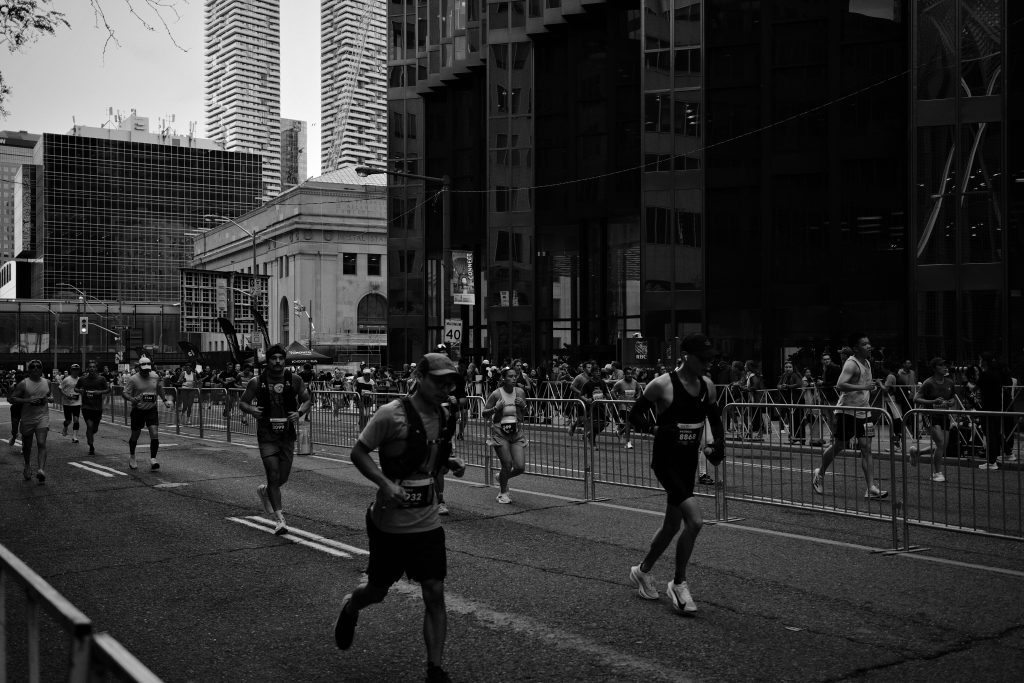
This can be particularly relevant at the Porto Marathon on 8 November. Its proximity to the Atlantic means wind can affect certain parts of the race even when temperatures are otherwise ideal for running.
Train in some of the conditions you might face
You do not need to deliberately choose the worst weather of the week for every training session.
But if you always avoid the rain, your first wet race can reveal problems you never discovered during training.
A few sessions in less-than-perfect weather can tell you:
- whether your socks cause blisters when wet;
- how much grip your shoes provide;
- which clothes remain comfortable when soaked;
- whether a cap actually helps;
- how wind affects your normal pace.
For trail runners, this matters even more.
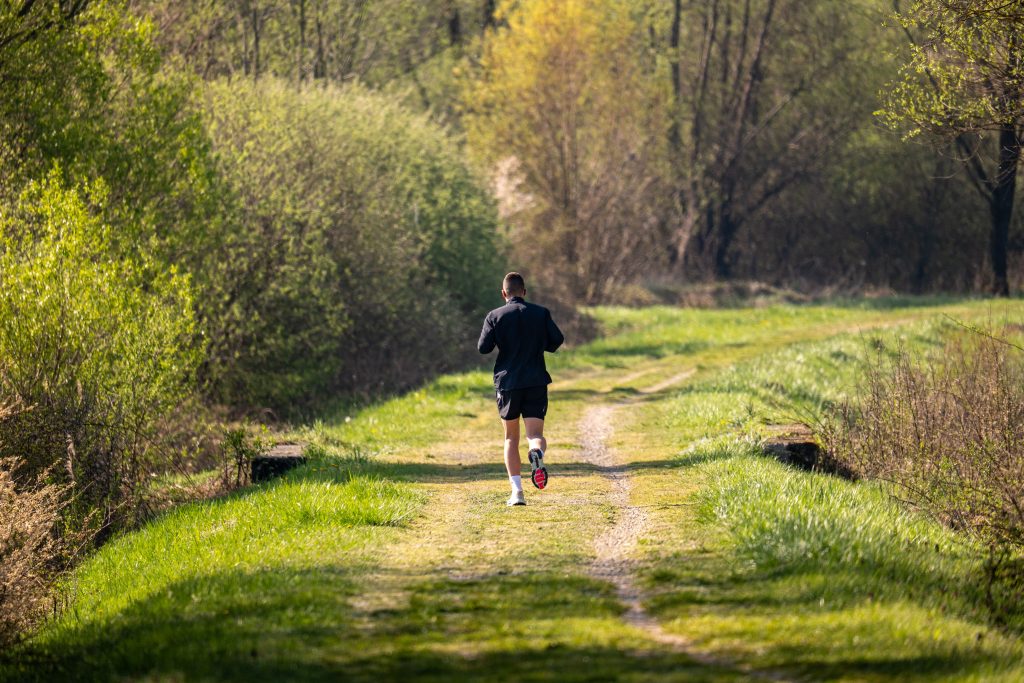
The Trail do Marco, also on 8 November, is a good reminder that rain on the trails is not simply about getting wet. It can mean mud, slippery rocks and a greater need to control your pace and footing.
More clothing does not always mean more comfort
One of the most common mistakes before a cold or wet race is overdressing.
You may feel cold while waiting in the start area, but your body temperature will rise quickly once you begin running.
Heavy layers can soon become too warm and, once soaked, even more uncomfortable.
Depending on the conditions, a simple race outfit might include:
- a technical running top;
- shorts or tights;
- a cap or visor;
- tested technical socks;
- a lightweight outer layer only when necessary.
For the wait before the start, an old sweatshirt you can remove or a disposable rain layer can often be more useful than carrying an extra layer for the entire race.
And, as always, race day is not the time to experiment with new clothing.
Pay particular attention to your feet
Being wet during a long race is normally uncomfortable.
Running for two or three hours with blisters can become a much bigger problem.
If rain is forecast, pay attention to both your shoes and socks.
Avoid cotton and choose materials that do not hold excessive amounts of water. If you regularly develop friction in certain areas, test an anti-chafing solution during training.
Do not automatically assume you need waterproof shoes either.
For road running, once water enters from the top, a highly waterproof shoe can sometimes make drainage more difficult.
Comfort, grip and familiarity with your shoes are usually more important.
In windy conditions, race by effort rather than pace alone
Rain and cold are obvious. Wind is often the factor that quietly destroys a pacing strategy.
If your target is 5:00 min/km, that does not mean you must force yourself to hit exactly that number while running into a strong headwind.
Spending too much energy to protect a few seconds early in the race can cost far more later.
Instead, keep your effort controlled and allow the pace to change naturally with the conditions.
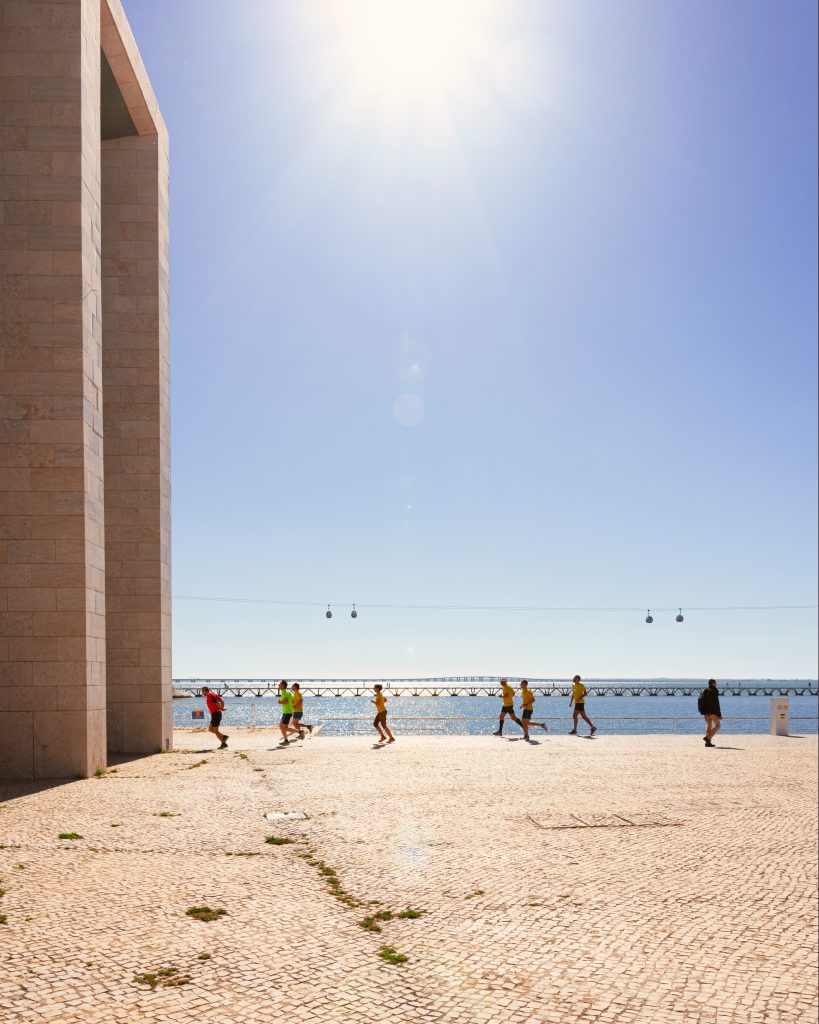
The Descobrimentos Half Marathon on 29 November is a good example. Its route alongside the Tagus can provide fast conditions, but runners may also be exposed to wind. On a windy day, smart effort management can matter more than hitting an exact pace every kilometre.
If you find a group running at a similar effort, sitting behind other runners can also offer some protection from the wind.
Wet surfaces require more attention
Wet asphalt is not necessarily slippery everywhere.
The biggest problems usually come from particular surfaces, including:
- painted road markings;
- pedestrian crossings;
- metal covers;
- wet leaves;
- cobblestones;
- tight corners;
- mud and rocks on trails.
Avoid sudden changes of direction and give yourself slightly more space behind other runners.
During an autumn trail such as the Trail do Marco, the difference can be even more significant. The pace you could comfortably maintain on a dry trail may no longer make sense when the terrain becomes wet and slippery.
Less daylight changes race preparation
Temperature is not the only thing that changes in autumn.
Days become shorter, and some races take place after sunset.
The Trail Noturno de Valongo on 12 December takes this to another level: running in the dark is part of the challenge, and a headlamp becomes essential equipment.
If you are entering a night race, do not use your headlamp for the first time on race day.
Test it beforehand so you know:
- how securely it fits;
- how long the battery lasts;
- how well it illuminates descents and uneven ground;
- whether you need a spare battery or light;
- how running in darkness affects your perception of speed.
Even for road races taking place in the late afternoon, including many December São Silvestres, travelling to and from the race after dark can change the logistics of the day.
Don’t forget hydration just because it is cold
Hydration is often associated with summer racing.
But you still lose fluids while running in cooler temperatures — you may simply feel less thirsty.
For a half marathon or marathon, keep using the strategy you tested in training.
You might not need exactly the same amount of fluid you would drink during a hot August run, but that does not mean you should ignore hydration completely.
The same applies to carbohydrates.
Cold weather does not remove the energy demands of long-distance running. If you trained to take a gel at certain intervals, there is usually no reason to abandon that plan simply because the temperature is lower.
Prepare for what happens after the finish
There is a major difference between running in wet clothes and standing still in them.
While you are moving, your body produces heat. Once you cross the finish line, you can become cold surprisingly quickly.
If the race provides bag drop, consider packing:
- a dry top;
- sweatshirt or jacket;
- dry socks;
- trousers;
- a plastic bag for wet clothing.
This can be particularly useful at late-season races such as the Descobrimentos Half Marathon or the São Silvestre do Porto, where conditions after the finish may feel significantly colder than during a summer event.
Autumn races to put your preparation into practice
If you are still deciding what to race next, Portugal’s late-season calendar offers several very different options.
The Porto Marathon on 8 November is a strong choice for runners looking for a major road race and an opportunity to manage pace in potentially cool and windy conditions.
On the same day, the Trail do Marco offers a very different challenge, with trail distances where the state of the terrain can become an important part of the race.
The Descobrimentos Half Marathon on 29 November is an option for runners looking for a potentially fast race in Lisbon, although wind along the Tagus can become part of the strategy.
The Trail Noturno de Valongo on 12 December adds another dimension altogether: darkness, winter temperatures and trail terrain.
And to finish the year on the road, the São Silvestre do Porto on 20 December brings runners into the city in the evening, making temperature, lighting and pre-race clothing part of the overall preparation.
They are very different races — which is exactly why there is no single strategy for autumn racing.
The weather does not have to change your goal
Seeing rain in the forecast does not automatically mean you are going to have a bad race.
Cooler temperatures can actually provide excellent conditions for endurance running.
The important thing is understanding what genuinely requires adjustment.
Light rain? Perhaps very little.
Strong wind? Adjust your effort.
Wet trails? Prioritise grip and control.
Night race? Test your equipment beforehand.
The goal is not to wait for perfect conditions. It is to arrive at the start line prepared for whatever conditions actually appear.
On RaceFinder, you can discover races across Portugal and explore road, trail and other endurance events for the months ahead.
Choose your next challenge, prepare for the course — and prepare for everything autumn might add to it.