How to Start Running in Portugal: The Complete Beginner’s Guide (2026)

Spring is here, the days are getting longer, and you’ve thought about it more than once: this is the year I start running.
Good news: there’s no better time. And it doesn’t have to be complicated.
This guide is for people starting from absolute zero — no experience, no special equipment, no pressure. Just what you actually need to know to take your first steps and, if you want, make it to the start line of a race before the year is out.
Why spring is the best time to start running in Portugal
Portugal’s spring is genuinely ideal for running. Temperatures between 14 and 20 degrees celsius are the sweet spot — warm enough to enjoy being outside, cool enough to run comfortably without overheating. The longer evenings give you flexibility to run after work. And the surroundings — parks, waterfronts, coastal paths — make the whole experience far more enjoyable than a treadmill.
Spring is also when Portugal’s race calendar starts filling up. There are 5km and 10km events all over the country between May and June — perfect distances for a first goal.
The first 4 weeks: an honest plan
The biggest mistake beginners make is doing too much, too soon. They go out and run 30 minutes on day one, can’t walk the next day, and stop.
The method that actually works is simple: alternate running and walking, gradually increasing the time spent running.
Weeks 1 and 2
3 sessions per week, 20 to 25 minutes each. Alternate 1 minute running with 2 minutes walking. Repeat for the full session. Pace doesn’t matter — if you can speak in short sentences while running, you’re at the right pace.
Week 3
3 sessions per week, 25 to 30 minutes each. Switch to 2 minutes running and 1 minute walking.
Week 4
3 sessions per week. Try to run 10 minutes continuously, walk for 2, then run another 10.
By the end of month one, most people can run 20 to 25 minutes without stopping. That’s a real milestone — and it’s more than enough to complete a 5km race.
An important note: rest days are part of the plan, not failures. Your body adapts during recovery, not during training.
What you actually need (and what you can ignore)
The sports industry wants you to think you need a lot of gear to start running. You don’t.
The one investment that’s worth making from the start
A decent pair of running shoes. They don’t need to be expensive — there are good options between €60 and €100. What matters is that they’re designed for running (not gym shoes or walking shoes) and that they fit your foot well. The best approach is to go to a specialist running shop and try several pairs.
The wrong shoe is the number one cause of injury in beginner runners. It’s worth the investment.
The rest you can add as you go
- Technical running clothing (breathes better than cotton, but not essential to start)
- A running app — Nike Run Club, Strava, and Garmin Connect all have free beginner plans
- Headphones (if you run with music, use only one ear so you stay aware of your surroundings)
What you can ignore for now
GPS watch, compression shorts, supplements, energy gels — none of this is relevant for the first few weeks. Focus on building the habit first.
Why having a goal changes everything: your first race
There’s a big difference between “I want to start running” and “I’m going to run the 5km at [race name] on [date].” The second has a date, a course, and a finish line.
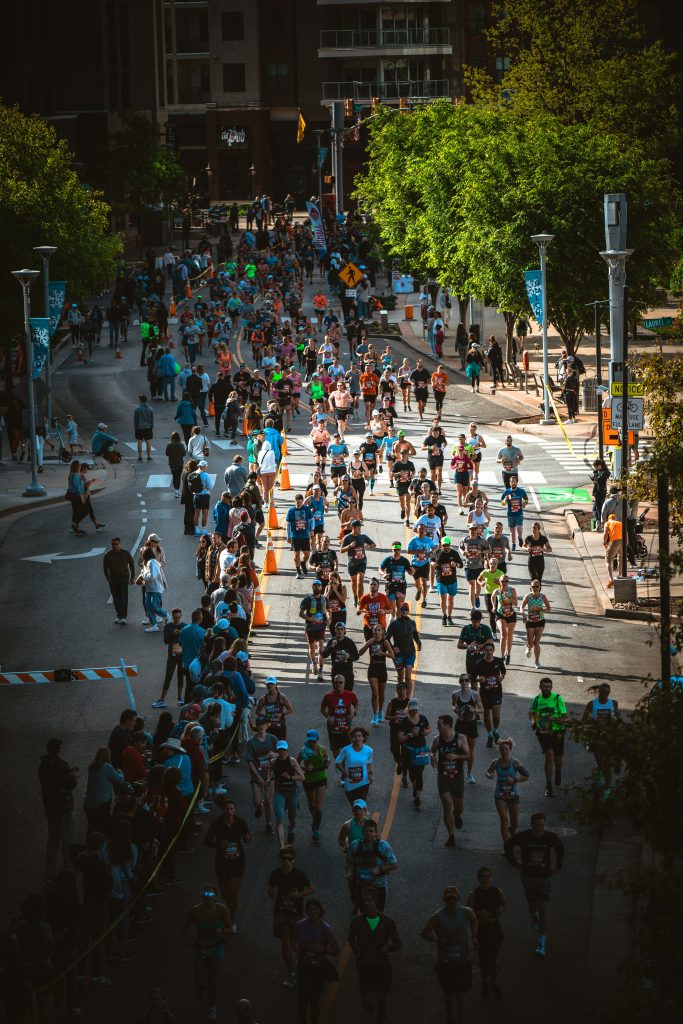
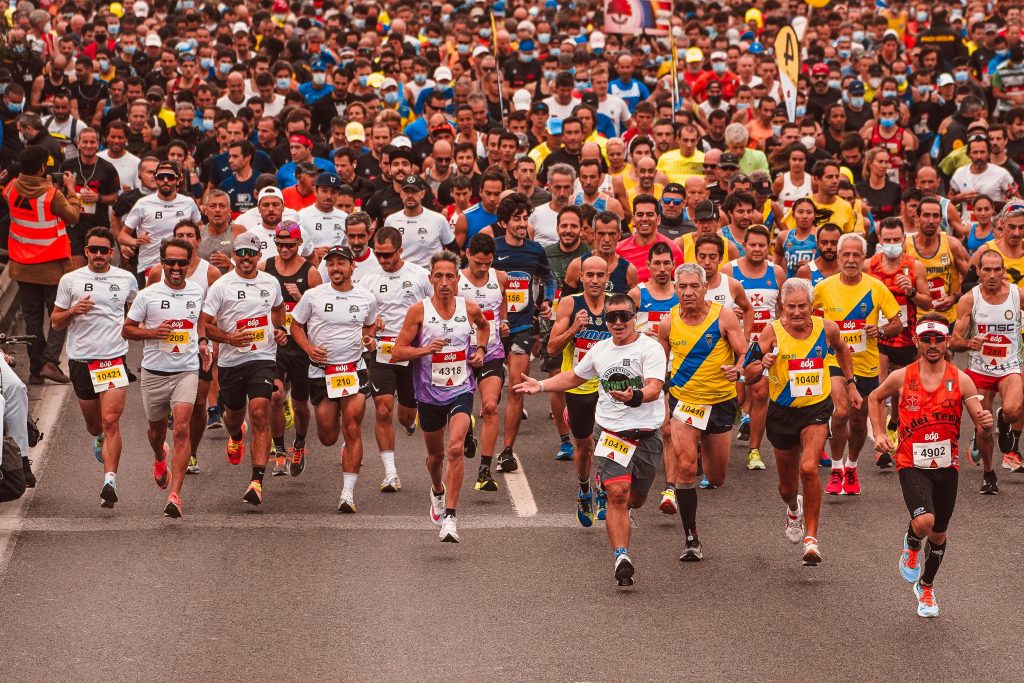
Having a race on the calendar changes everything. It gives you a concrete reason to go out on cloudy days. It turns each training session into part of a plan rather than an isolated activity. And the experience of crossing a finish line for the first time — with people cheering, other runners around you — is something you don’t forget.
In Portugal, 5km races are perfect for a first goal. They’re accessible to everyone, have generous cut-off times, and the atmosphere is typically very welcoming to first-timers.
The best beginner races in Portugal in 2026
Portugal’s running calendar is packed with options for first-time racers. Some formats to look for:
Urban 5km races — usually held in cities and towns, flat course, lots of atmosphere. Ideal for a first race.
Charity runs — there are dozens across the country throughout the year. Less competitive pressure, more relaxed atmosphere.
Night runs — a format that has grown enormously in Portugal in recent years. The atmosphere is unique and the vibe is especially friendly to newcomers.
Summer festival races — many local councils organise running events tied to summer festivals between June and August. Informal, affordable, and full of good energy.
👉 Browse all running races in Portugal on RaceFinder — filter by date, region, and distance to find the right race for your debut.
Community: you don’t have to run alone
Running solo works. But running with others is easier, more enjoyable, and has a much lower dropout rate.
In Portugal, there are running groups in virtually every city — many free, open to everyone, and especially welcoming to beginners. Search on Facebook or Instagram for “grupo de corrida” (running group) plus your city name. Most meet on weekend mornings.
Many running shops also organise free weekly group runs — a great way to meet other runners and pick up practical tips.
What to expect in the first few months
Weeks 1 and 2: It will be harder than you expected. Your lungs will protest. Your muscles will be sore. This is normal — your body is adapting.
Weeks 3 and 4: It starts to get easier. The running intervals increase without as much effort. There are days when you catch yourself actually enjoying it.
Month 2: The habit starts to settle. You notice when you haven’t run. Your first race starts to feel real.
Month 3: You cross the finish line. And you’re already thinking about the next one.
Start today — your first race is waiting
Running is one of the simplest and most accessible ways to stay active. You don’t need a gym, a training partner, special equipment, or a particular level of fitness to start. You just need to walk out the door and take the first steps.
And when you’re ready for your first race, RaceFinder has the complete calendar of running events in Portugal — filter by date, region, and distance to find the right event for you.