How Runners Are Choosing Their Next Race in 2026

Something has shifted in the way runners think about races.
It used to be simple: you picked a distance, you trained for it, you showed up, you chased a personal best, you went home. The race was a test. The finish line was the point.
In 2026, the finish line is still the point — but everything that surrounds it has changed completely. How runners discover races, why they choose one over another, who they run with, and what they expect from the experience has been transformed in ways that even seasoned runners are only beginning to notice.
Here’s what’s actually happening.
1. Run clubs are now the primary discovery channel
If you want to understand how runners find their next race in 2026, start here. Run clubs have become the new social scene, especially for Gen Z. Young runners are turning run clubs into social hubs, replacing nightlife with movement-based connection.
This matters for race discovery because run clubs are the most influential word-of-mouth network in the sport. When a group of 30 people shows up every Saturday morning to run together, they talk about races. Someone mentions they’re doing a trail 10km next month. Three others sign up that afternoon. The race didn’t reach them through a newsletter or a sponsored post — it reached them through a conversation after a run over coffee.
Referral programs contribute 7% of all registration dollars when enabled — and because some races still use other platforms, the real impact is even greater. Word of mouth isn’t just alive in running. It’s the dominant force.
For runners looking to discover what’s happening near them, the best move in 2026 is to find a local run club. The race calendar comes with it.
2. Experience has overtaken the personal best as the main motivation
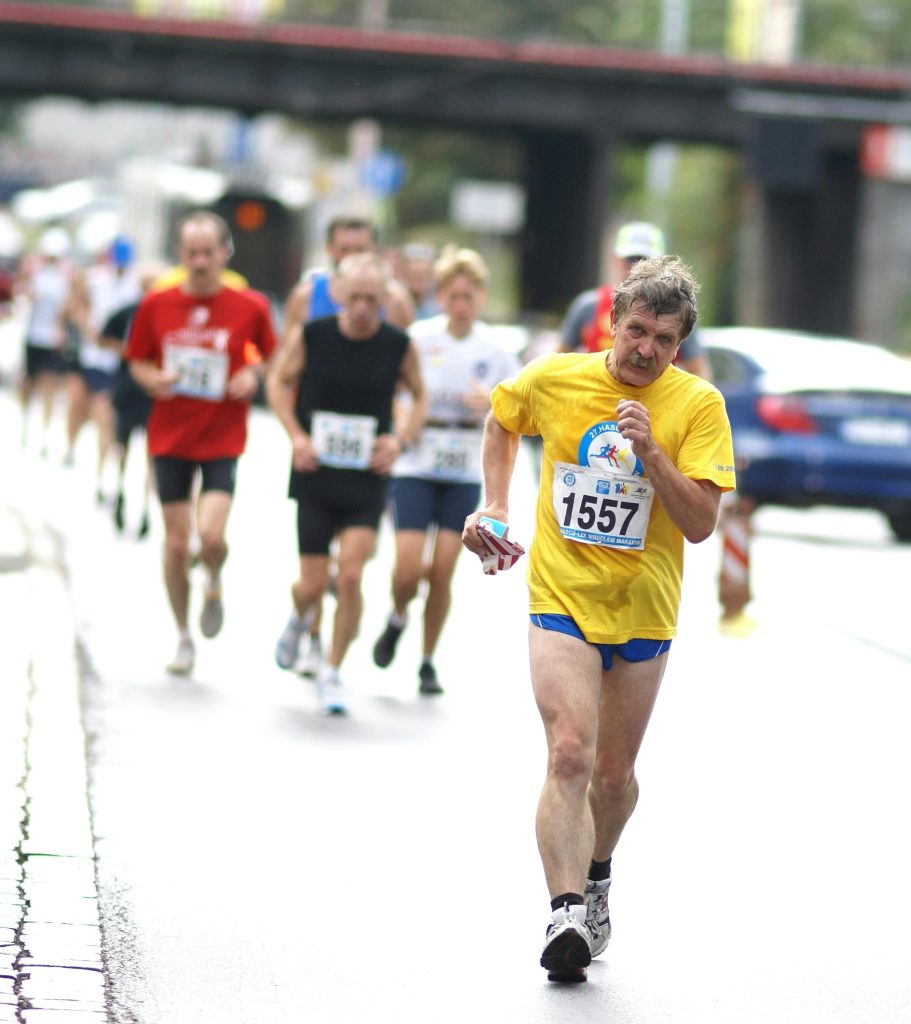
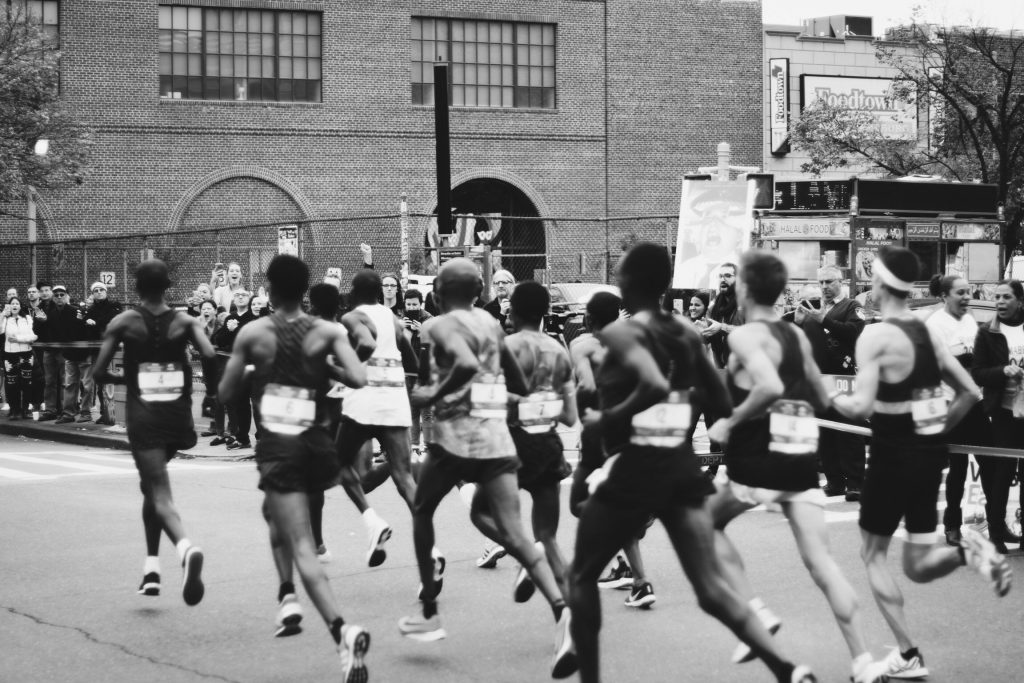
This is perhaps the most significant shift of the past few years. Where races used to be transactional — turn up, chase a personal best, collect a medal, and go home — they’re now immersive, socially layered experiences.
Runners in 2026 are asking different questions when they choose a race. Not just “what’s the course record?” but “what does the route look like?”, “who else is going?”, “what’s the atmosphere like at the finish?”, “is there something worth staying for afterwards?”
Branded shake-out runs fill city streets the day — or even the entire week — before big events. Expos have evolved into retail theatres and community hubs. And travelling abroad for a race is no longer niche; it’s increasingly how runners choose to explore the world.
This is running tourism, and it’s one of the fastest-growing motivations for race entry. Portugal, with its combination of scenic routes, mild climate, and accessible entry fees, sits perfectly in this trend.
3. Trail running has gone mainstream
Trail running used to feel like an elite, gatekept sport. In 2026, it’s becoming the outdoor social activity for people who want more from their fitness than a gym session.
The numbers support this. Trail events are growing faster than road races across Europe. The format appeals to exactly the same motivations driving the run club boom: community over competition, experience over performance, adventure over efficiency.
Group trail runs are popping up in every mountain town. The vibe is distinctly different from competitive road running — more adventure, more community, less pace obsession.
For runners choosing their next race in 2026, trail is often the answer — especially when the course offers something that a road race simply cannot: forest, altitude, coast, silence.
Portugal has some of the best trail terrain in Europe. From the Peneda-Gerês National Park to the volcanic islands of the Azores, from Monsanto forest in Lisbon to the Serra da Estrela. And it’s all on the calendar.
👉 Browse trail races in Portugal → racefinder.pt
4. Younger runners are driving participation growth
18–29 year olds made up 17.9% of participants in 2025 — the highest since 2017 and higher than pre-pandemic levels. This demographic had been declining for years and its return is significant for the sport’s long-term health.
This is a generation that grew up digital but is choosing analog experiences. They want real moments — sweat, finish lines, people. 30% of Gen Z plan to spend more money on fitness in 2026, and 64% say they would rather spend money on fitness than on dating.
They also choose races differently. They’re less likely to find events through running magazines or club newsletters. They find them through Instagram, through Strava segments, through run clubs, and through platforms that aggregate the calendar in one place — where they can browse, filter, and decide quickly from their phone.
74% of race website views and 63% of transactions now come from mobile or tablet devices. Runners aren’t sitting at desks to sign up for races. They’re doing it at a coffee shop after a Saturday morning run.
5. Hybrid events are creating new entry points
One of the fastest-growing segments isn’t pure endurance at all. Hybrid events like HYROX, obstacle course races, and functional fitness competitions combine running with strength challenges. These events appeal to gym-focused athletes who want the social energy of a race without committing to a marathon training block.
The crossover effect is real and significant: athletes who start with HYROX or Tough Mudder frequently progress to trail races, bikepacking expeditions, and mountain events. It’s becoming a pipeline that feeds the broader endurance community.
In Portugal, HYROX arrived for the first time in May 2026, and national hybrid events like the Hyberic Run, HYGOES, and the RFM Performance Manz Games have been building a dedicated community for years. These events are bringing entirely new runners into the sport — runners who will be looking for their next challenge on the calendar.
👉 See hybrid events in Portugal → racefinder.pt
6. Smaller races are having a moment
87% of races have fewer than 500 participants, and these small events attract 38% of total runners. The big city marathons and the iconic trail races get the headlines, but most running happens at a smaller scale — local 10kms, regional trail events, municipal races with 200 finishers and a finish-line banana.
And runners are choosing these events deliberately. Not because they can’t get into the big races, but because the experience is different. You know people at the start line. The organiser is visible. The atmosphere is personal. You’re not a bib number — you’re a runner.
Portugal’s calendar is full of these events, spread across every region, every weekend, every month of the year.
7. The calendar matters more than ever
Race week registrations have declined slightly for the first time — with a growing share of registrations happening further in advance. Runners in 2026 are planning their seasons earlier, building their race calendar at the start of the year, and treating their season as a sequence of goals rather than a single event.
This means the discovery moment — when a runner finds a race and decides to do it — is increasingly happening months in advance. Having a race on the calendar is motivating. It structures training, creates anticipation, and gives meaning to the kilometres in between.
Find your next race
However you choose your races — through your run club, through social media, through a recommendation from a friend, or through browsing a calendar on a Sunday afternoon — the best races in Portugal are waiting.
RaceFinder has the complete calendar: road running, trail, triathlon, duathlon, cycling, open water, and hybrid events, across every region of the country and the islands.
Filter by date, distance, location, and discipline. Find something that makes you want to train.
Find your next race in Portugal → racefinder.pt
Some races worth putting on your radar right now
Trail & Mountain
- 🏔️ Douro Montemuro Ultra Trilhos — Cinfães | 7 June → See on RaceFinder
- 🌊 Ultra Maratona Caminhos do Tejo — Lisbon to Fátima | 5–6 June → See on RaceFinder
Road Running
- 🏅 Meia Maratona do Porto — Porto | 13 September → See on RaceFinder
- 🏙️ EDP Maratona de Lisboa — Lisbon | 10 October → See on RaceFinder
- 🏃 Maratona do Porto — Porto | 8 November → See on RaceFinder
Hybrid
- 🏟️ Hybrid Day Leiria — Estádio Municipal de Leiria | 17–18 July → See on RaceFinder
- 💪 Hyberic Run — Chaves, Vila Real | 30 May → See on RaceFinder
Cycling & Multi-sport
- 🚴 HELL160 Shadows and Dust — Serpa, Beja | 3–5 July → See on RaceFinder
- 🏊 TriChallenge — Águeda | 27–28 June → See on RaceFinder